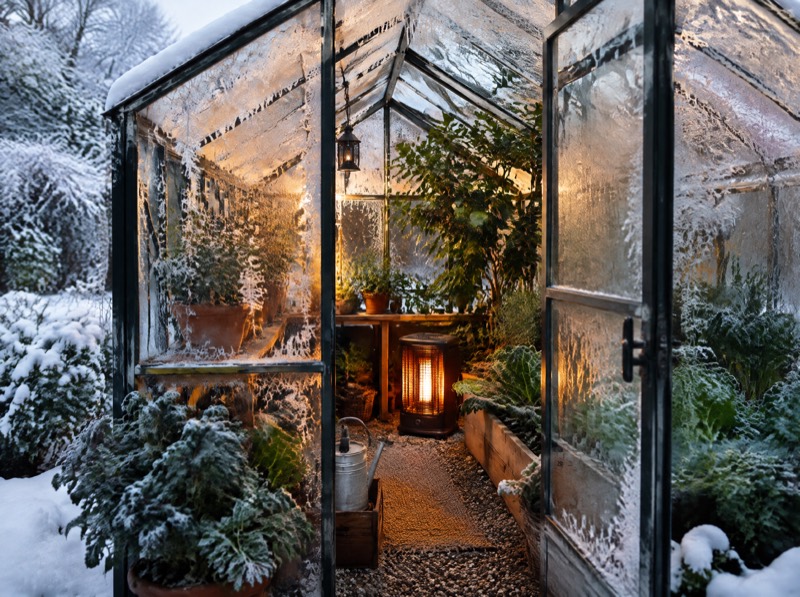
Heating a greenhouse through the cold months does not have to be expensive. From insulation to thermal mass, here is how we keep the frost out without breaking the bank.
When the first frost arrived last November, I learned a valuable lesson about heat loss: a greenhouse is wonderfully good at losing warmth. Glass and polycarbonate panels let light in, but they also let heat escape faster than almost any other building material. The good news is that keeping a small greenhouse frost-free through winter is less about buying expensive heaters and more about working with the principles your greenhouse already follows.
Start with insulation
Before you think about heat, think about keeping the heat you already have. Bubble wrap designed for greenhouses, fixed to the inside of the frame with clips, can reduce heat loss by a third or more. It looks less elegant, I admit, but your plants will not mind. Seal the gaps around doors and vents with draught excluder — a surprising amount of cold air sneaks in through a poorly fitting door.
Use thermal mass to store the sun
Water stores heat far better than air. A row of black water barrels along the north wall of the greenhouse absorbs sunshine during the day and releases it slowly at night. Two or three barrels made a noticeable difference in our glasshouse: on clear days, the temperature stayed above freezing well into the night without any heating at all. Dark stone slabs or even buckets of water among the shelving work on the same principle.
Choose your battles with plants
Be honest about what deserves winter protection. Hardy herbs like rosemary and sage survive in an unheated greenhouse in most of Europe. Tender plants — citrus, begonias, pelargoniums — need a corner near the thermal mass, wrapped in horticultural fleece on the coldest nights. I group all my tender pots together in one section and insulate only that corner with a bubble wrap curtain, which turns a whole-greenhouse problem into a small-tent problem.
A little electric heat, carefully used
For genuinely cold snaps, a small electric greenhouse heater with a thermostat is worth having. Set it to keep the temperature just above freezing rather than warm: the goal is frost protection, not a tropical climate. Run it on a thermostat and it may only switch on for a handful of nights each winter. Always use an outdoor-rated connection and keep the heater clear of leaves and compost, which are surprisingly flammable.
Winter in a greenhouse is a quieter season, but it is far from a dead one. With insulation, thermal mass and a modest backup heater, the glasshouse becomes a place where growth simply slows down rather than stops — and where the first seedlings of spring are already waiting by February.