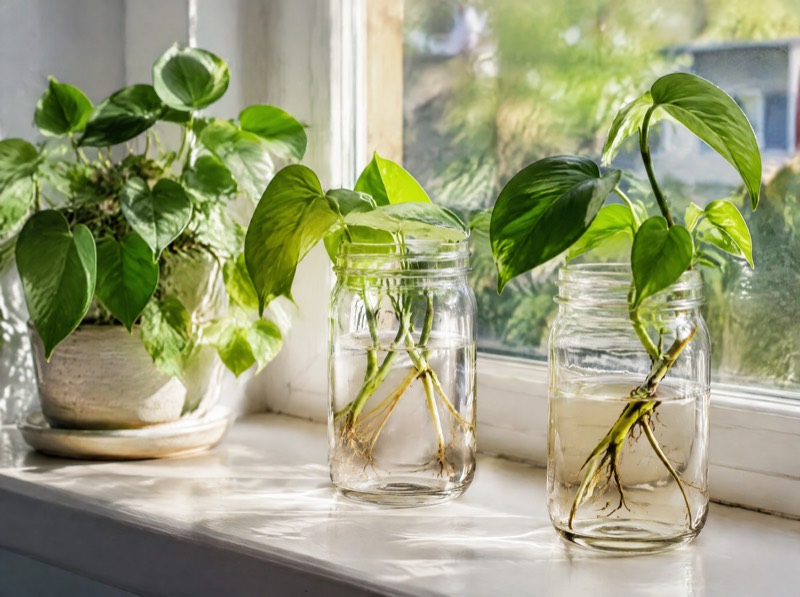
Rooting cuttings in a jar of water is the simplest way to turn one plant into many. Here is the method that works for pothos, monsteras and most soft-stemmed favourites.
There is something quietly magical about watching roots appear in a jar of water on the windowsill. Propagation in water is the most accessible form of plant multiplication: no special equipment, no rooting hormone, and a clear view of progress that soil can never give you. If you have never taken a cutting before, this is the place to start.
What propagates well in water
Soft-stemmed houseplants root most willingly. Pothos, philodendron, monstera, tradescantia, syngonium and begonias are the classics. Woody or slow plants — most succulents, for example — prefer soil and will simply rot if you leave them in water. A good rule of thumb: if the stem is soft and green, water is worth trying.
Taking the cutting
Find a healthy stem with at least two or three leaves. With a clean, sharp blade, cut just below a node — the small bump where a leaf meets the stem. Nodes are where roots form, so a cutting without a node will never root. Remove the lowest leaf so that an inch or two of bare stem sits below the water line; any leaf left submerged will decay and spoil the water. Take a longer cutting than you think you need: you can always trim, but you cannot add.
Caring for the jar
Use a clear glass jar — roots photosynthesise less in the dark, and clear glass lets you watch for problems. Place it in bright, indirect light. Direct sun warms the water and encourages algae; a dark corner does the opposite of what you want. Change the water every few days, or whenever it looks cloudy, and top it up as it evaporates.
Roots usually appear within two to four weeks. Wait until you have a healthy cluster several centimetres long before potting on. When you move the cutting into soil, keep it evenly damp for the first fortnight — the water roots need time to adapt to their new job of pulling moisture from soil instead of sitting in it.
One warning from experience
Do not be tempted to root everything at once. I once filled the kitchen windowsill with thirty jars during an enthusiastic weekend and spent the rest of the spring potting on cuttings nobody had room for. Propagate what you can give away, plant out, or genuinely want more of. The joy of a jar of roots is best when it does not become a chore.