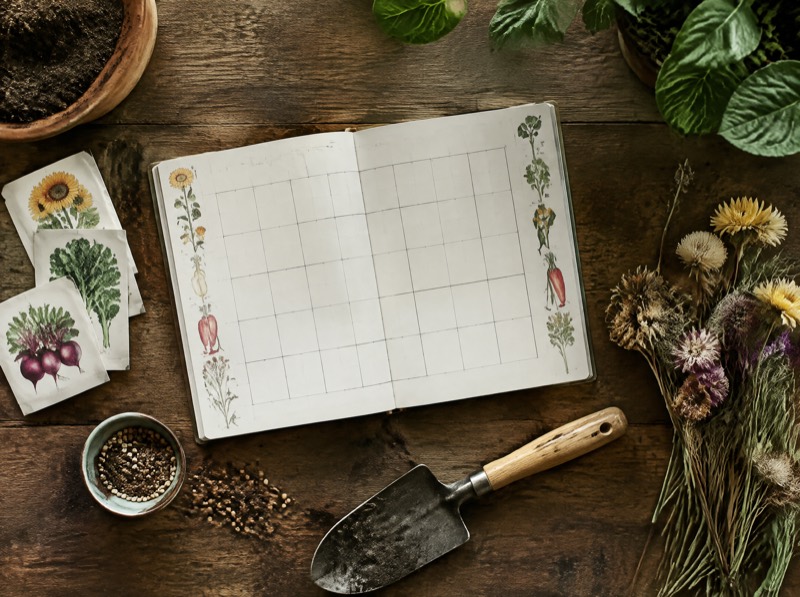
The difference between a garden that feeds you in August and one that feeds you all year is planning. Our month-by-month sowing guide for a temperate greenhouse.
Every spring, the same scene plays out in gardens everywhere: a glorious burst of sowing in April, a magnificent harvest in July, and then — nothing. The secret to eating from your garden for more than eight weeks a year is not effort. It is a calendar.
Winter: the quiet sowing
Even in the depths of winter, a heated corner or a bright windowsill can host the slowest but most rewarding sowings of the year. Broad beans sown in autumn stand through winter in the greenhouse border. In late January, the first onions and chillies go into trays — they are slow to germinate and benefit from the head start.
Spring: the main event
March and April are when the greenhouse earns its keep. Tomatoes, peppers, cucumbers and basil are sown indoors with gentle bottom heat. Succession is the word to hold in your mind: rather than sowing an entire packet of lettuce at once, sow a small pinch every fortnight. A fortnightly tray of salad leaves beats a single overwhelming glut every time.
Summer: keep the wheels turning
By June the greenhouse is full and the temptation is to stop sowing entirely. Resist. This is the moment to start autumn and winter crops: kale, chard, autumn spinach and winter lettuce all want to be sown while the days are still long. Come July, it is time to think even further ahead — spring cabbage and overwintering onions sown now will be ready when the greenhouse empties next April.
Autumn: the second spring
September and October offer a second season in the glasshouse. Days are shorter and light is weaker, but a greenhouse extends the growing season at both ends. Salad leaves, oriental greens like mizuna and pak choi, and hardy herbs all grow steadily through autumn under glass and will crop into winter with a little fleece on cold nights.
Writing your own
Our calendar lives on a sheet of paper taped inside the greenhouse door, amended every year in pencil. Note what you actually sowed and what actually worked, not what the seed catalogue promised. After three seasons, your own calendar will be better than anything you can buy — because it is calibrated to your soil, your light, and your appetite.