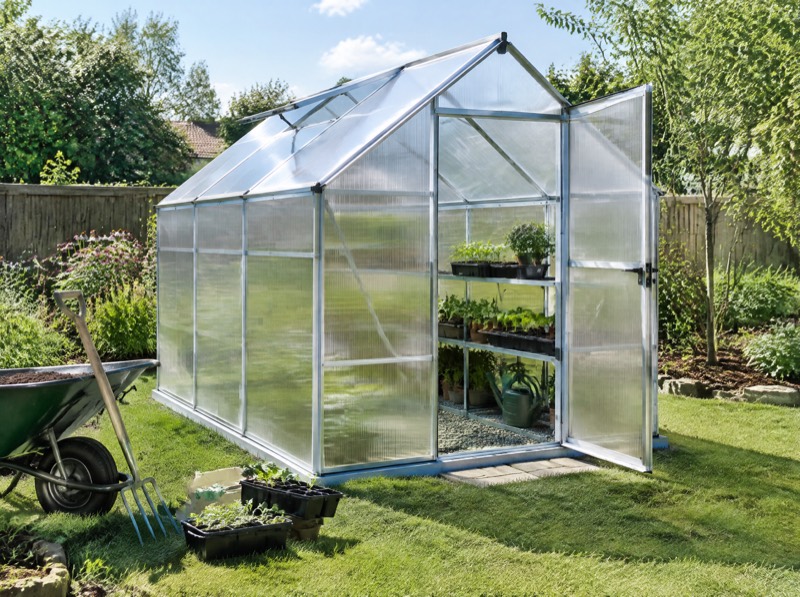
Before you buy: size, position, glazing and the honest budget for a first greenhouse. Everything we wish we had known before the first pane went in.
There is a moment every gardener knows: standing in the drizzle, looking at a tray of seedlings that the forecast promises to flatten, and thinking — there must be a better way. The better way is a greenhouse. But choosing one is a minefield of sizes, glazings and prices, so here is the guide I wish someone had handed me before ours went up.
Buy bigger than you think you need
The universal law of greenhouses: whatever size you buy, you will fill it by the second spring. A 6-by-8-foot house is the honest minimum for a family kitchen garden; a 8-by-10 gives room to stand, work, and overwinter tender plants in comfort. If budget or space forces a choice, choose a larger footprint over fancier features — a big basic greenhouse beats a small deluxe one every time.
Position is destiny
Spend a day watching shadows before you commit. The ideal position gets sun from morning to mid-afternoon, with the ridge running east–west so the long south face catches light. Keep it clear of mature trees — their shade moves with the seasons, and their leaves find every gutter. Avoid the frost-pocket at the bottom of a slope, where cold air gathers; halfway up a gentle slope is the traditional wisdom for good reason.
Glazing: glass or polycarbonate?
Horticultural glass is beautiful, cheap and lets in the most light, but it is fragile — a football, a hailstorm, an enthusiastic branch. Toughened glass is safer and stronger and the best choice for family gardens. Polycarbonate (twin-wall) is light, safe, and insulates well, but it yellows and scratches over the years and shows grime. There is no wrong answer; there is only the answer that matches your household.
The honest budget
The greenhouse itself is rarely the whole cost. Add a firm, level base — paving slabs or concrete — and allow for staging or benches, which double your usable space. A water butt fed from the gutter is cheap and will save you carrying cans within a month. Ventilation matters more than heating: roof vents, an automatic opener that works by wax expansion (no electricity, entirely magical), and a door you can prop open on hot days.
The first season
Do not fill it immediately. Grow one tomato crop, one tray of salads, one pot of basil, and learn how your particular greenhouse behaves — where the sun falls, where the draught sneaks in, what dries out first. The greenhouse is a long relationship. Start slowly, and by the second spring you will wonder how you gardened without it.