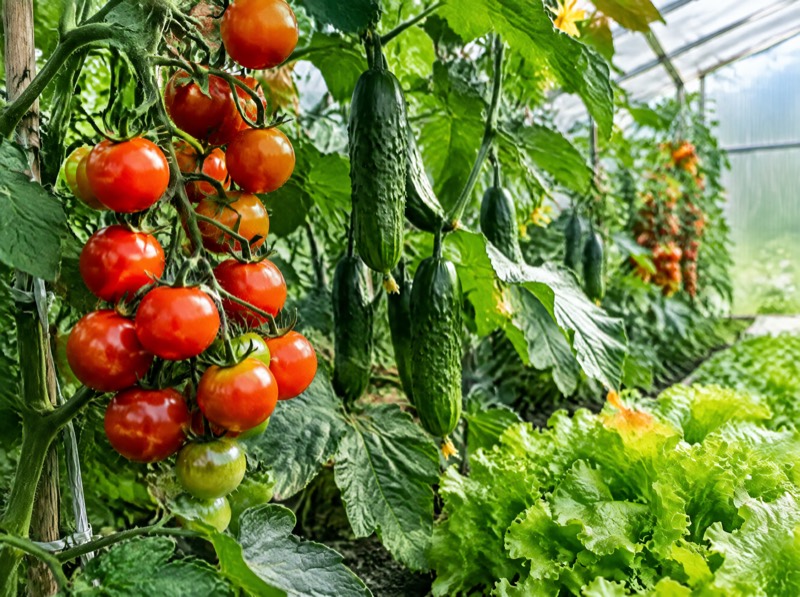
A greenhouse changes what is possible in your kitchen garden. These ten crops reward protected growing with earlier, heavier, and longer harvests.
Outdoor gardening is a negotiation with the weather. Greenhouse growing is something closer to an agreement: in exchange for a little attention, the glass gives you earlier harvests, later harvests, and a list of crops that simply refuse to perform outdoors in most of Europe.
The essentials
Tomatoes are the classic greenhouse crop for good reason — under glass, a single vine can produce kilograms of fruit from June to October. Cucumbers adore the humidity and climb enthusiastically to the roof. Peppers and chillies need the reliable warmth that outdoor summers only promise; in a greenhouse they turn from stubborn to generous. Aubergines belong to the same family and want the same treatment.
The speed demons
If you want quick satisfaction, nothing beats the fast crops. Salad leaves of every kind — lettuce, rocket, mizuna, lamb's lettuce — are ready to cut in four to six weeks, and a tray sown fortnightly keeps you in salads all year. Radishes are ready in a month. Spring onions and baby spinach fill gaps between slower crops on any spare bench.
The overachievers
French beans crop weeks earlier under glass and keep going far longer than outdoor sowings. Basil — the herb most people fail at outdoors — becomes a small shrub in a greenhouse border, provided you pinch out the flowers and never let it dry out. A greenhouse basil in July is one of the small luxuries of this hobby: pick as much as you want, and there is more next week.
A word on layout
Match crops to their season and their height. Tall, long-season crops — tomatoes, cucumbers, aubergines — take the middle border or big pots and stay until autumn. Fast salad crops fill every temporary gap in trays on the bench edges, sown successionally. Don't be precious: the greenhouse works hardest when every square metre is doing something.
Start with tomatoes, salad leaves and basil. Once you taste a greenhouse-grown tomato in June or cut salad in February, the arithmetic of the whole enterprise suddenly makes sense.