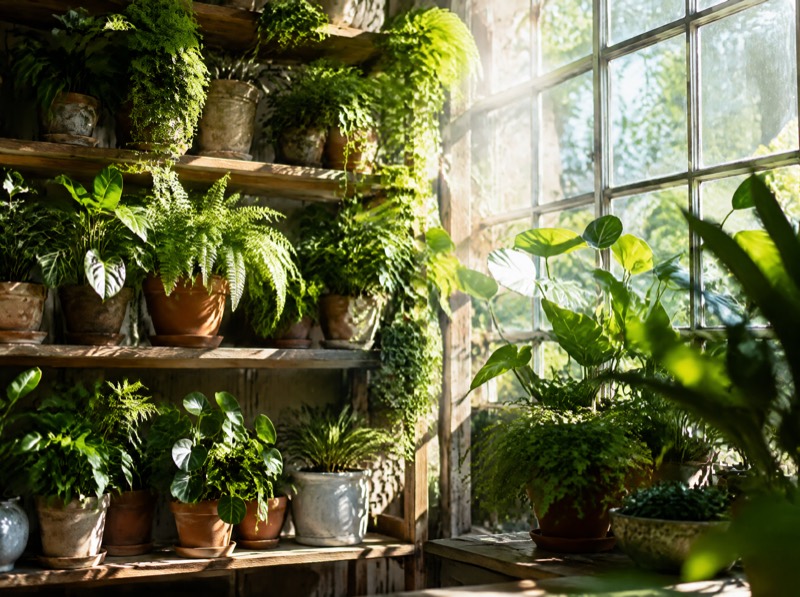
Full sun, partial shade, dappled light — seed packets speak a language of their own. A plain guide to reading light in your own garden and greenhouse.
Ask an experienced gardener what went wrong with a struggling plant, and they will ask about light before anything else. Light is the single variable that determines whether a plant merely survives or actually thrives — and it is the one most often misjudged, because our eyes are terrible light meters.
Decoding the labels
Full sun means six or more hours of direct summer sun. Partial shade means three to six hours, ideally in the morning. Full shade does not mean darkness — it means less than three hours of direct sun, typically bright open sky. The surprise for most new gardeners is how few spots in a normal garden genuinely offer full sun once you include the shadows cast by fences, hedges and the house itself.
Mapping your garden's light
On a sunny day in late spring, photograph your garden — or greenhouse bench — every two hours from eight in the morning to six in the evening. Lay the photographs side by side. The result is your personal light map, and it will almost certainly contradict your assumptions. The corner you thought was sunny may get four hours; the bed in the shade of the hedge may get bright open light all day, which many plants love.
Light inside a greenhouse
A greenhouse sounds like the answer to every light problem, but glass costs you light: even a clean pane transmits only around eighty to ninety per cent of the sunshine that strikes it, and a dirty one considerably less. Wash panes in early spring. Shadows matter more under glass, too — a single tomato plant at the front of the bench will shade everything behind it by midsummer. Put the tall things on the north side of the greenhouse and the short, quick crops — salads, radishes — on the sunny south edge.
Reading your plants
Plants report their light conditions honestly if you know the signs. Stems stretched, pale and leaning towards the window mean too little light. Leaves curled, scorched or bleached patches mean too much, usually combined with heat. A plant that stops growing in midsummer, despite water and feed, is often simply sitting in a shadow you have not noticed.
Match the plant to the light you actually have, not the light you wish you had — the garden rewards honesty.