Aphids, whitefly and slugs will find your greenhouse — but soap, ladybugs and a few companion plants can hold the line without chemicals.
Every greenhouse is a small ecosystem, and some of its residents are unwelcome. The goal of natural pest control is not a pest-free glasshouse — that is neither possible nor desirable — but a balance where the troublemakers never quite get the upper hand. It is easier than it sounds, because most pests have natural enemies that will work for free if you let them.
Start with healthy plants
Pests are opportunists. Aphids and red spider mite zero in on plants that are already stressed — underwatered, overcrowded, or fed too much soft nitrogen-rich growth. Spacing plants for airflow, watering evenly, and avoiding overfeeding prevent more infestations than any spray. Spider mite in particular despises humidity, so a damping-down of the greenhouse floor on hot days is your first line of defence.
The gentle arsenal
Soft soap spray is the workhorse: a teaspoon of pure soap in a litre of water, sprayed on and under the leaves, breaks down aphid and whitefly bodies without leaving anything harmful behind. Yellow sticky traps catch whitefly and fungus gnats and, just as usefully, tell you how big the problem is. For scale and mealybug, a cotton bud dipped in dilute soap or alcohol removes them one by one — tedious, but astonishingly effective on a treasured plant.
Recruiting the allies
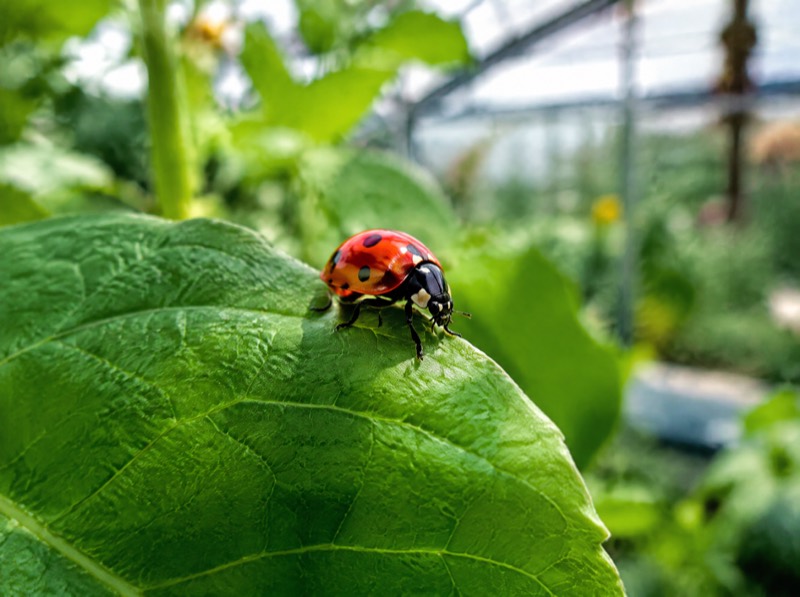
Ladybirds and their larvae eat fifty aphids a day each, and their presence is a better pest control than anything in a bottle. You can buy ladybirds and lacewings for release in the greenhouse, but a garden with plenty of flowers — calendula, alyssum, marigolds — attracts them for free. Hoverfly larvae are equally voracious and are drawn in by the same flowers. A strip of flowers beside the greenhouse door is pest control disguised as decoration.
Slugs, and the price of hospitality
Slugs love a greenhouse: damp, sheltered, and full of seedlings. Remove their daytime hiding places — bits of wood, pots stacked on soil, dense groundcover — and check beneath benches. Traps of beer or grape juice halvesunk in the soil work on the ones that remain, and a torchlight patrol after dusk is unfairly effective.
Accept the principle of tolerance. A few aphids are food for ladybirds; a few nibbled leaves are the rent a garden pays. The balance you are building is the point — and it holds.