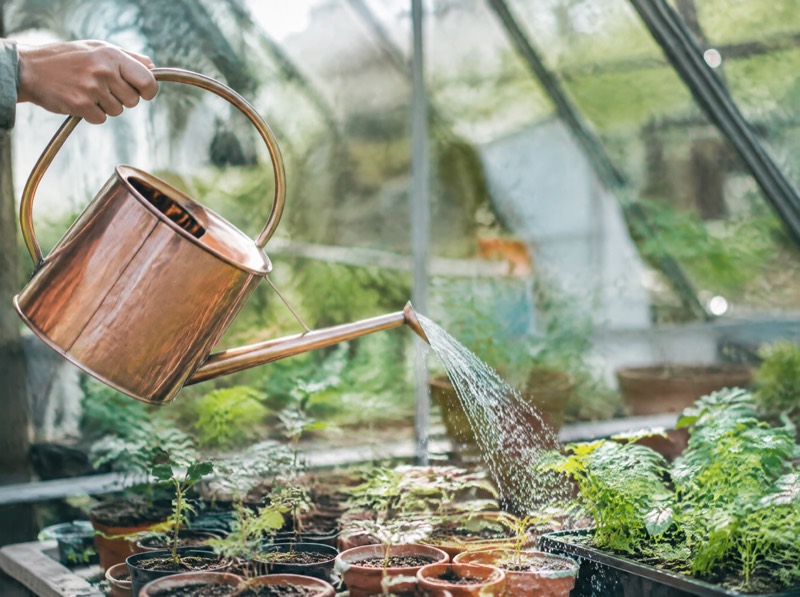
More plants die from kindness than drought. How to read your greenhouse, water properly, and take a holiday without losing everything.
If I had to name the single skill that separates flourishing greenhouses from struggling ones, it would be watering. Not fertilising, not pruning — watering. It sounds absurdly simple, yet it is where almost every beginner (and, honestly, most experienced gardeners) goes wrong.
The finger test beats every gadget
Push a finger two or three centimetres into the compost. If it feels moist, walk away. If it is dry at that depth, water — thoroughly, until it drains from the bottom. The common failure mode is the daily sprinkle: a little water every evening wets the top centimetre, trains roots to stay near the surface where they suffer first in the heat, and leaves the pot dry at depth. Water less often, and properly.
Timing matters under glass
Water in the morning if you can. Plants take up moisture during the day, and wet foliage overnight invites fungal trouble. In the height of summer, a second watering in the early evening may be needed for thirsty crops like cucumbers and tomatoes in pots — pour it at the base, not over the leaves.
How greenhouse watering differs from outdoors
Under glass, everything is amplified. A sunny June day can dry a small pot in hours; the same plant outdoors might have lasted two days. Compost in black plastic pots bakes from the sides as well as the top. Grouping pots together shades the sides and slows evaporation. A capillary mat — a water-absorbing blanket under the pots — keeps everything evenly moist for days and is the single best investment for a busy gardener.
The holiday problem
Every greenhouse gardener eventually faces the August holiday. The solutions, in ascending order of reliability: move pots into the shade and stand them in trays of water; lay capillary matting from a reservoir into the greenhouse; and ask a neighbour, with instructions written in advance and a strict warning that more plants are killed by kindness than neglect. Tell them: if in doubt, do not water.
Learn to read the leaves
Plants tell you what they need. Wilting at midday in summer is normal; wilting in the morning is a cry for help. Leaves that yellow and drop while the compost stays wet are drowning, not thirsty. Watch, test with a finger, and water on evidence — not on habit.